
Clinical competence is not the same
as clinical sustainability.
You don’t need to become a better osteopath. You are already competent. You already care. And you are probably more exhausted than you are willing to admit.
Not because you lack skill or dedication — but because no one taught you how to build a sustainable clinical practice that can hold your work, your energy, and your life.
You aspire to a clinic that supports your practice.
Clinical competence does not guarantee clinical sustainability.
Clinical Osteopathic education prepares you to listen, to treat, to adapt.
Yet, it rarely prepares you to structure time, income, visibility, and continuity of care.
Many practitioners work hard, ethically, and quietly — while carrying inconsistent schedules, emotional load, and financial uncertainty.
This is not a personal failure.
It is a structural gap.
Occupational Burnout
Disengagement
Compassion Fatigue
Burnout is not always a sign of doing too much.
Often, the fatigue and disengagement are signs of a clinic that is poorly aligned with the reality of practice and professional aspirations.
When the structure does not support the work, effort fills the gap — until it cannot.
This is where Practice Reorientation comes in.
What Is Practice Reorientation?
Practice Reorientation is a process of realigning your clinic — its rhythm, boundaries, visibility, and continuity — so that your work can be sustained without constant effort.
The aim is not growth.
It is not about adding more techniques, more strategies, or more pressure.
The aim is coherence.
And it rests on the Three Pillars of Sustainable Practice: Clinic Architecture, Clinical Visibility, Sustainable Continuity.
The Three Pillars of a Sustainable Practice
Clinic Architecture
The structure that supports the work.
How time, fees, scheduling, and professional boundaries shape both energy and sustainability so that clinical care remains sustainable for the practitioner as well as the patient.
Clinical Visibility
How the practice becomes understandable and findable to the people who need it.
Visibility that communicates clearly without self-promotion or compromising professional values.
Sustainable Continuity
Creating a steady flow of patients that supports care — and income — over time.
A practice that supports both continuity of care and a stable professional livelihood.
These three pillars are not simply elements of a practice; they are forces that shape the practitioner’s life experience of their work. When clinic architecture is unclear, time, fees, and boundaries drift, often leading to exhaustion and burnout. When clinical visibility is weak, the practice lacks presence, and practitioners remain difficult to find or understand, creating uncertainty and professional insecurity. When continuity is unstable, the flow of patients becomes unpredictable, bringing financial stress. When these structural dimensions are consciously designed, they work together to support a practice that is sustainable for the practitioner, the patients, and the work itself.
Reorientation takes form as a two-day, in-person course
Practice Reorientation is offered as a two-day, in-person course designed for osteopaths already in clinical practice and for recent graduates aspiring to set up a sustainable clinical practice.
It focuses on how the clinic itself is structured and presents itself to clients — time, boundaries, visibility, and continuity — so that your work can be sustained without constant effort.
What The Course Is
• A two-day, in-person reorientation of your osteopathic practice
• Practical, grounded, and immediately applicable
• Focused on clinic structure, not clinical technique
• Designed for practitioners already in practice
• A marketing course
• A business hustle program
• A promise of quick fixes or exponential growth
• A critique of your clinical ability
What The Course Is Not
Big ideas, real impact.
This course does not assume something is wrong with your practice.
It assumes you have reached a point where refinement matters more than effort.
Not more intensity
— more steadiness.
What Changes After Reorientation
More predictable weeks
Fewer gaps and last-minute cancellations
Clearer communication with patients
Less internal friction around money and time
A renewed sense of direction
This is for osteopaths in practice — and recent graduates building their first clinic…
who are already clinically competent, but are tired of mentally carrying the weight of visibility, scheduling, and structure, and want their practice to feel coherent, and not scattered.
Are already qualified and practicing
Care deeply about patients
Feel the weight of inconsistency or fatigue
Want sustainability without compromising ethics
You sense that working harder is no longer the answer
looking for fast growth or external validation, or are not yet ready to question how they relate to their professional role.
A fast money-making scheme
People seeking rapid expansion or scale
Those wanting scripts, hacks, or shortcuts
You prefer pressure-based motivation
This may not be for practitioners…
In-Person Format,
Practical Knowledge,
Readily Applicable,
Real Impact.
Embodied professions require embodied learning
Space for reflection, recalibration, and application
Small group, high signal, no performance
A quiet, grounded, and intentional opportunity to rethink and reorient your professional practice
Apply for the next two-day reorientation
Osteopathic Practice Reorientation
A course on clinical practice reorientation for osteopaths based on Visibility, Communication, and Sustainable Continuity.
Practice Reorientation is facilitated by an osteopath in long-term clinical practice, with training in osteopathy and anatomy, and lived experience of restructuring a clinic to support sustainability over time.
A sustainable clinic is not a compromise. It is what allows good osteopathy to continue.
Contact
info@osteopathievaudreuildorion.com
(514) 346-1967
Location
100 boulevard Harwood, suite 202
Vaudreuil-Dorion, QC J7V 1X9
Practice Reorientation
Osteopathic practice is often entered with care, rigor, and commitment.
Most practitioners do not arrive at exhaustion through neglect, but through responsibility.
Over time, however, many discover that competence alone does not protect against strain. The work continues. The patients arrive. The days fill. And slowly, the clinic begins to shape the practitioner more than the practitioner shapes the clinic.
This page exists for those who want to understand why that happens - and why reorientation becomes necessary not at the beginning of a career, but in the middle of it.
Why Does Reorientation Matter Mid-Career?
Because it is no longer about adding capacity.
It is about restoring coherence.
At the beginning, structure sets the tone.
It allows clinical practice to develop as visible, coherent, and sustainable over time.

Early in practice, effort compensates for structure.
Energy fills gaps. Flexibility absorbs inconsistency. Commitment carries what is not yet clearly held.
Mid-career is different.
By this point, practitioners are no longer learning how to treat — they are carrying responsibility. Clinical judgment deepens. Relationships with patients extend over time. The work becomes more subtle, more demanding, and more relational.
It is also at this stage that many realise they are practising inside a structure they never consciously designed.
Schedules accumulate. Fees are set once and rarely revisited. Availability expands without clear boundaries. Visibility remains vague or reactive. None of this is dramatic, yet together it quietly governs the clinic.
For Recent Graduates, it is More About Foundations.
In the first years after graduation, most practitioners focus on one thing: becoming good clinicians.
At this stage the priority is developing clinical presence, building trust with patients, and gaining experience in the realities of practice.
Yet a clinical practice is not sustained by clinical skill alone. It also depends on the structure that supports the work.
How services are organised… How patients understand what you offer… How visible the practice is to the people who need it… How time, availability, and fees are defined.
When these elements are left undefined, the practice grows reactively. Schedules expand without direction. Boundaries become unclear. Workload increases without necessarily strengthening the practice itself.
Many forms of practitioner fatigue begin here — not from the work with patients, but from the absence of a clear structure around the work.
For new graduates, establishing this structure early changes the trajectory of a practice.
Practice Reorientation Applies Osteopathic Principles to the Clinic Itself.
Osteopathy teaches us to observe relationships rather than isolated parts. Structure and function are inseparable. Adaptation follows constraint.
Health emerges when forces are distributed rather than concentrated.
These principles do not stop at the treatment table.
A clinic is also a structure.
Time, fees, scheduling, visibility, and continuity interact in ways that either support or undermine the practitioner. When these elements are misaligned, the practitioner compensates — often unconsciously — with effort, availability, and self-sacrifice. Over time, this compensation becomes fatigue.
Practice Reorientation is the application of osteopathic thinking beyond the treatment room. Not as a metaphor, but as a method.
The question is not "How do I do more?"
It is "What is my practice asking me to compensate for?".

Reorientation as a Process, Not a Correction
Practice Reorientation — Intensive Two-day Course
From reactive clinic management to structurally sustainable practice.
A practical two-day intensive programme for osteopaths who want to transform an irregular, reactive clinic into a clear, visible, and structurally sustainable practice that supports both steady patient flow and long-term professional wellbeing.
This is a bespoke training for clinic owners who want to move from irregular weeks and reactive scheduling to a steady, sustainable practice — without increasing workload or risking burnout.
Participants will examine the structural elements that shape the stability of a clinic and learn how to organise them so the practice supports both clinical work and professional sustainability.
Key Take-aways:
• A clear understanding of clinical visibility: the how and whys of the clinical communication rhythm for Instagram, Google, and email campaigns in order to increase visibility, grow the practice, and reduce “up and down” weeks
• A stabilised clinic structure: An automated system to manage bookings, client records, consultation notes, billing, and record keeping so daily clinic operations run reliably and efficiently
• Continuity and patient retention: Practical systems for client follow-up, retention, and sustainability
Who it’s for: Osteopaths / manual therapists who own or run a clinic and want more stability and consistency in their client base.
Format: Two days, in-person
Dates/Location: [T.B.D.]
Price: [T.B.D.]
Reorientation does not assume something is wrong. It assumes something has drifted. Drift is natural in long practice. It is also reversible.
To reorient is to pause, observe the whole, and adjust relationships so that force can move differently. Less against. More through.
This work respects competence. It respects limits. And it recognises that sustainability is not a personality trait, but a structural outcome.
Course Facilitator
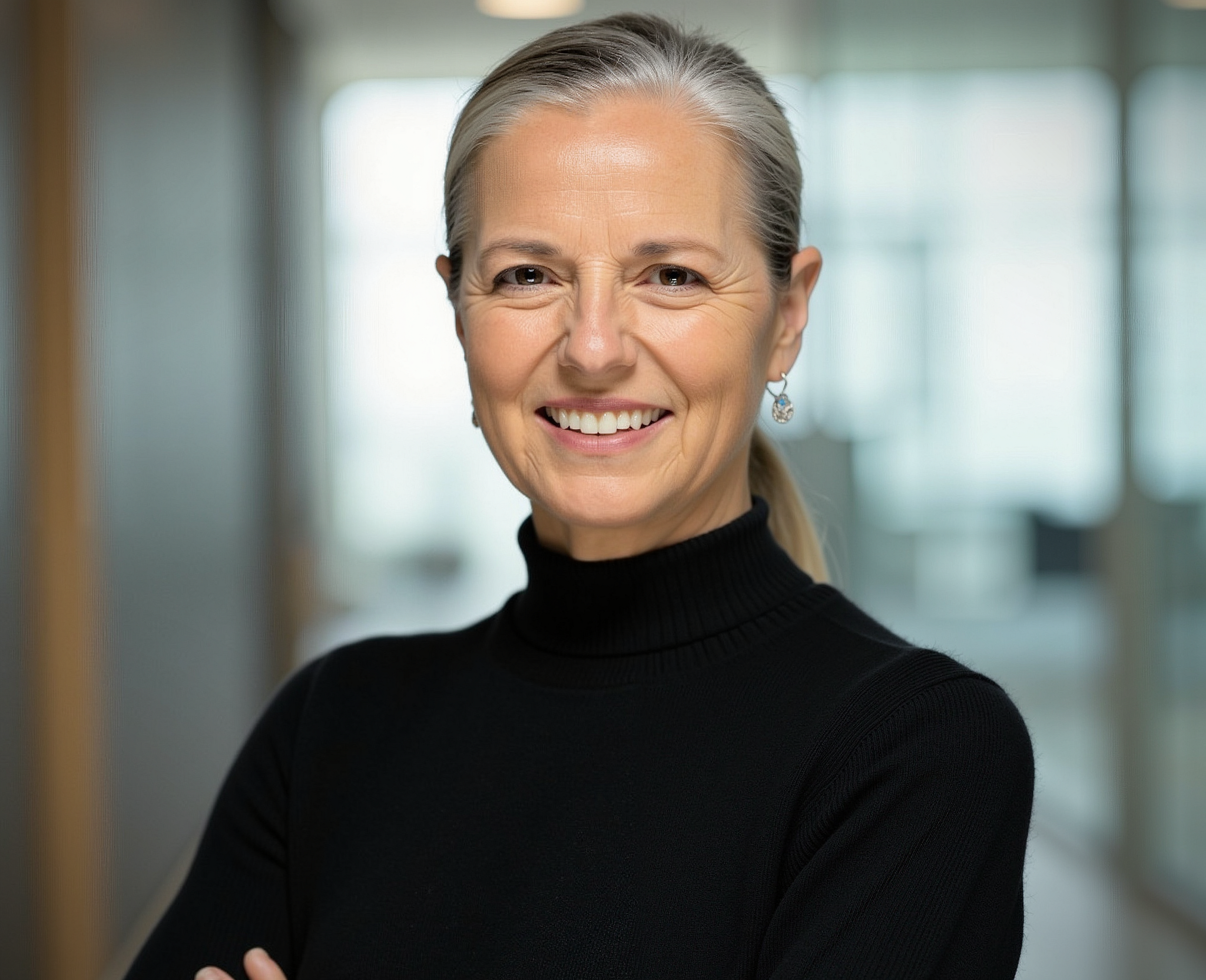
Maria-Rosario Rebolledo, D.O.
I am an osteopath in long-term clinical practice.
My training began at the Collège d’études ostéopathiques in Montréal, where I completed my osteopathy degree and defended a thesis on the foundations of osteopathic practice and the process of tissue release. I also hold a Bachelor’s degree in Anatomy from McGill University, which continues to inform the way I understand structure, adaptation, and function in the living body.
Over the years, my practice has included adults of all ages, athletes, and older patients, supporting a wide range of situations — from postural strain and sports-related injury to convalescence and rehabilitation. Like many practitioners, I was trained extensively in how to treat, listen, and adapt clinically.
What was less clearly taught was how to build a clinic that could hold this work over time.
Through experience, ongoing education in Canada and the United States, and periods of questioning my own way of practicing, I came to see that clinical quality alone does not guarantee sustainability. Time, boundaries, visibility, and continuity of care quietly shape the practitioner as much as technique shapes the patient.
Practice Reorientation emerged from this realization.
The work I facilitate is not about teaching osteopaths how to practice better, but about helping them look at their clinic as a living structure — one that can either drain effort or support it. The intention is to realign practice so that care can continue without constant strain, and so that the practitioner remains oriented, present, and available over the long term.
This work is grounded in respect for clinical competence, ethical restraint, and the reality of practice as it is lived.
My practice: Osteopathy at a higher level
Contact Us
If you have questions about Practice Reorientation - the two-day format, the intention of the work, or whether it is appropriate for your current practice - you're welcome to get in touch.
This is not a sales conversation.
It is a space to clarify fit.
Some practitioners contact us because they are curious but unsure.
Others because something in the description resonated and they want to understand more concretely how the reorientation works.
Both are appropriate.
You are not expected to decide anything by contacting us.
You can use this space to ask a practical question, describe where you are in your practice, or simply say what prompted you to reach out.
You'll receive a thoughtful response, not a pitch.
Already Oriented?
If, after reading about Practice Reorientation, you feel ready to explore whether this work is appropriate for vou, vou're welcome to apply directlv.
Applying does not assume commitment.
It is a way of clarifying alignment - for you, and for the work.